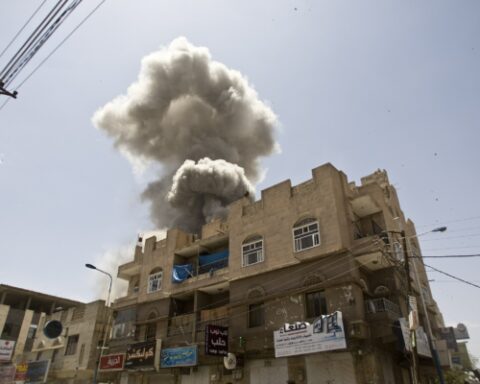

Explosions shook Saudi Arabia’s capital Thursday morning as the war between Yemen’s Iran-backed Houthi militia and a Saudi-led military coalition escalated, fueling fears of a widening regional conflict that has already drawn in multiple countries and rattled energy markets.
A New York Times reporter in Riyadh heard several blasts in rapid succession. Hours later, Maj. Gen. Turki al-Maliki, a spokesman for the Saudi-led coalition in Yemen, said two missiles headed toward Riyadh had been intercepted. Saudi authorities did not respond to questions about the situation.
The latest blasts came one day after Saudi officials said Houthi strikes on airports in Riyadh and Abha, a city in the country’s south, killed three people and injured dozens more.
Wednesday’s attacks were the deadliest in Saudi Arabia since the kingdom began bombing Houthi positions in Yemen this year, in what it initially described as retaliation for the group’s attacks on Saudi soil.
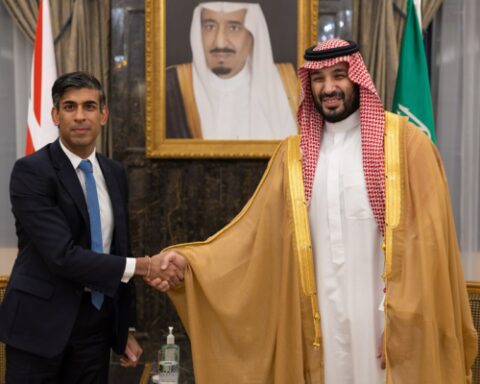
The strikes on the capital ramp up pressure on Crown Prince Mohammed bin Salman, the kingdom’s de facto leader, as the conflict threatens his plans to transform Saudi Arabia into a business and tourism hub.
Riyadh is set to host several international events in the coming weeks, including an annual investment summit hosted by the crown prince that draws world leaders, billionaires and top global executives.
Two residents, speaking on condition of anonymity, said workers at an office tower in the city were told to evacuate. In recent days, Saudi authorities have warned residents not to share information about missile and drone attacks, cautioning that they could face legal consequences.
Houthi military spokesman Yahya Saree said Thursday the group had targeted Riyadh’s airport with a ballistic missile and issued what he called a final warning to international airlines about the consequences of continuing to fly in Saudi airspace.
Overnight, al-Maliki said the coalition struck back for the airport attacks by hitting dozens of Houthi military sites, including missile storage facilities and command centers. The Houthis did not respond to that claim.
The escalation sent oil prices sharply higher on concerns about further supply disruptions. Brent crude, the global benchmark, climbed nearly 5% on Thursday.
This week, Yemen’s internationally recognized government, backed by Saudi warplanes, launched a counteroffensive to retake strategically important territory along the Red Sea from the Houthis.
Over the past month, the Iran-backed group seized large stretches of Yemen’s coast, giving it greater control over the Bab al-Mandab Strait, a critical waterway for global trade at the southern end of the Red Sea.
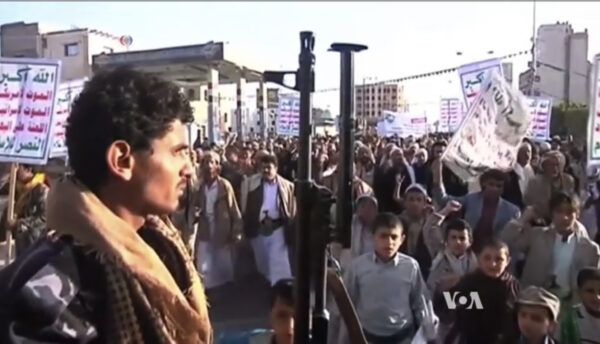
The fighting is raging on multiple fronts. While Yemeni government forces say they are advancing along the coast, the Houthis claim they are making gains in the inland city of Taiz, a government stronghold.
A Yemeni government army officer in Taiz, who spoke on condition of anonymity because he was not authorized to speak to the media, said Houthi forces had effectively surrounded the city and that residents were running out of gas and food.
The latest fighting has pushed Saudi Arabia and the Houthis back into open conflict. The United Nations said Wednesday that nearly 200,000 Yemenis have been displaced since the fighting intensified in September.