
Former Defense Secretary Jim Mattis is warning that ending the current conflict in the Middle East without a clear resolution could hand Iran a strategic advantage over one of the world’s most critical waterways, even as the Trump administration signals a temporary pause in military operations.
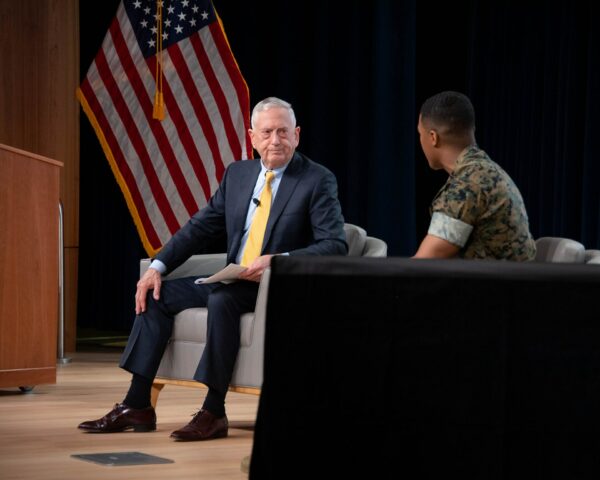
Speaking Monday at CERAWeek by S&P Global in Houston, Mattis painted a stark picture of the risks tied to the Strait of Hormuz, a narrow passage through which roughly 20 percent of the world’s oil supply flows. According to Mattis, a premature declaration of victory by the United States could allow Iran to claim effective control over the strait—potentially imposing costs on global shipping and reshaping the balance of power in the region.
“Iran right now, if we declared victory, they would now say they own the strait,” Mattis said. “You’d see a tax for every ship that goes through.”
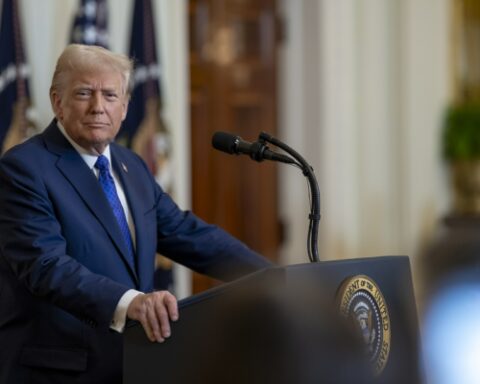
His comments come at a moment of shifting signals from Washington. On Monday, President Donald Trump announced a five-day pause in strikes targeting Iran’s energy infrastructure, describing recent talks with Iranian leaders as productive. The pause arrives as the U.S.-Israeli conflict with Tehran enters its fourth week, raising questions about whether diplomacy can gain traction after weeks of sustained military pressure.
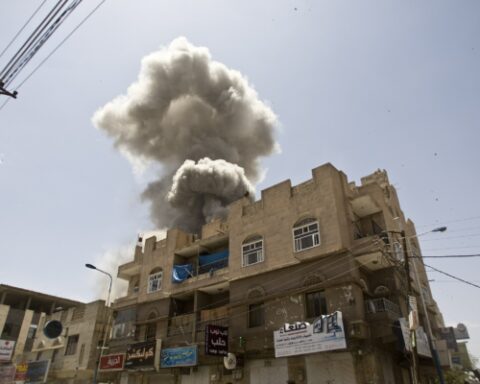
At the same time, the situation in and around the Strait of Hormuz remains tense. Iranian retaliation against Israel and Gulf states has contributed to a near closure of the critical waterway, sending shockwaves through global energy markets. Oil prices surged amid the disruption before falling back to around $90 per barrel following Trump’s announcement of the temporary halt in strikes.
U.S. officials say efforts are underway to rally international support to secure the strait and restore stability. Ambassador to the United Nations Mike Waltz said Sunday that allies are beginning to align with the United States on reopening the passage, emphasizing the broader stakes involved.
“We are seeing our allies come around as they should,” Waltz said, while also reiterating the administration’s view that Iran has long sought to leverage control over energy supplies as a tool of pressure.
Despite the heavy toll inflicted on Iran’s military capabilities, the threat has not been eliminated. U.S. Central Command reported Monday that more than 140 Iranian naval vessels have been damaged or destroyed during the conflict. Yet Mattis cautioned that even a weakened Iranian force retains the ability to disrupt shipping.
“They’ve got anti-ship cruise missiles that could be fired off the back of a pickup truck that can go 100 miles,” he noted, underscoring the asymmetric nature of the challenge.
Mattis acknowledged the difficulty of the current situation, describing it as a “tough spot” with no easy solutions. His remarks reflect a broader tension in the debate over the conflict: while decisive action may degrade an adversary’s capabilities, it does not necessarily resolve the underlying risks—particularly in a region where geography alone can confer leverage.
The Strait of Hormuz remains a focal point of that reality. Control over such a chokepoint carries enormous economic and strategic implications, and even limited disruptions can ripple across global markets.
As the administration weighs its next steps, the temporary pause in strikes may offer a moment to reassess. But Mattis’s warning suggests that stepping back without a clear plan could create new challenges, even as it aims to reduce immediate tensions.
In a conflict where both action and restraint carry consequences, the path forward remains uncertain—caught between the desire to secure vital interests and the recognition that prolonged confrontation can bring its own costs.