
A new report from The Wall Street Journal suggests that the United Arab Emirates has quietly taken a more direct role in the ongoing conflict with Iran, marking a notable escalation in a war already drawing in multiple global and regional powers.
Citing people familiar with the matter, the report states that the UAE has carried out military strikes on Iranian targets—an allegation that, if confirmed, would make it the first time the Gulf nation has been identified as an active combatant in the war. Until now, the primary actors have been the United States, Iran, and Israel, with other regional players largely operating on the sidelines or facing indirect consequences.
The UAE has not publicly acknowledged the reported strikes, but it has been far from untouched by the conflict. Throughout the war, Iran has targeted the country with missile and drone attacks, including strikes that hit Dubai and key oil infrastructure. Those incidents have underscored the vulnerability of even well-defended nations in a region where tensions can escalate rapidly and unpredictably.
Often referred to as “Little Sparta”—a nickname attributed to former Defense Secretary James Mattis—the UAE has built a reputation as a capable military force in the Middle East, with a modern air force and a sophisticated intelligence apparatus. The reported involvement would align with that profile, signaling a willingness to move beyond defensive measures and take direct action.
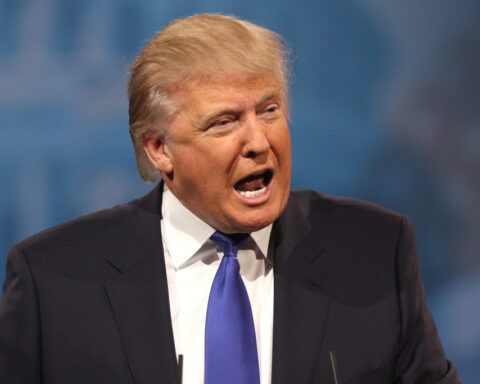
According to the report, one of the strikes targeted a refinery on Iran’s Lavan Island in the Persian Gulf. The attack, which allegedly occurred in early April, is said to have caused a significant fire and disrupted much of the facility’s capacity for months. Notably, the timing coincided with Donald Trump announcing a cease-fire following a five-week air campaign, raising questions about how firmly that truce had taken hold at the time.
The Trump administration, according to a source cited in the report, was not troubled by the strike, in part because the cease-fire had not yet fully settled. In fact, the administration is said to have quietly welcomed the participation of the UAE and potentially other regional nations, reflecting a broader strategy that appears to favor burden-sharing among U.S. allies.
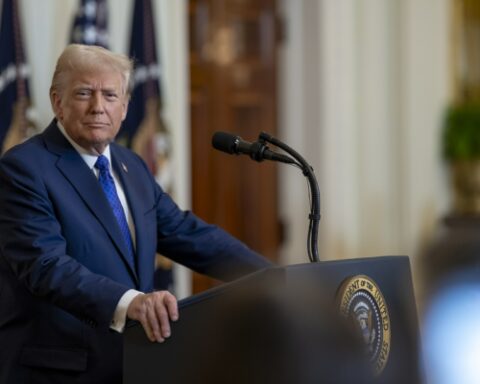
Speaking from the Oval Office on Monday, Trump pointed to Iran’s earlier missile attacks on neighboring countries as a major strategic misstep. He noted that strikes against nations such as Saudi Arabia, Qatar, the UAE, Kuwait, and Bahrain had broadened the scope of the conflict and, in his view, squandered resources.
“You saw that when they started shooting rockets,” Trump said during a question-and-answer session with reporters. “Nobody thought Saudi Arabia and Qatar and UAE were going to get hit, or Kuwait and Bahrain. And it was a tremendous strategic mistake.”
He also emphasized the effectiveness of U.S. defensive systems, noting that Patriot missile defenses were able to intercept incoming threats.
The reported involvement of the UAE highlights how quickly regional conflicts can draw in additional players, often blurring the lines between defense and escalation. While some may see expanded participation as a show of strength or deterrence, it also raises the stakes in a volatile region where each new strike risks further entanglement.
As more countries become directly involved, the challenge of containing the conflict grows more complex. Even as leaders point to strategic gains or defensive successes, the broader reality remains: modern warfare, particularly in the Middle East, rarely stays contained for long, and the ripple effects can extend far beyond the battlefield.